Thomas Jefferson, the Fourth of July, and the $157,000 Fake Wine That Fooled the World
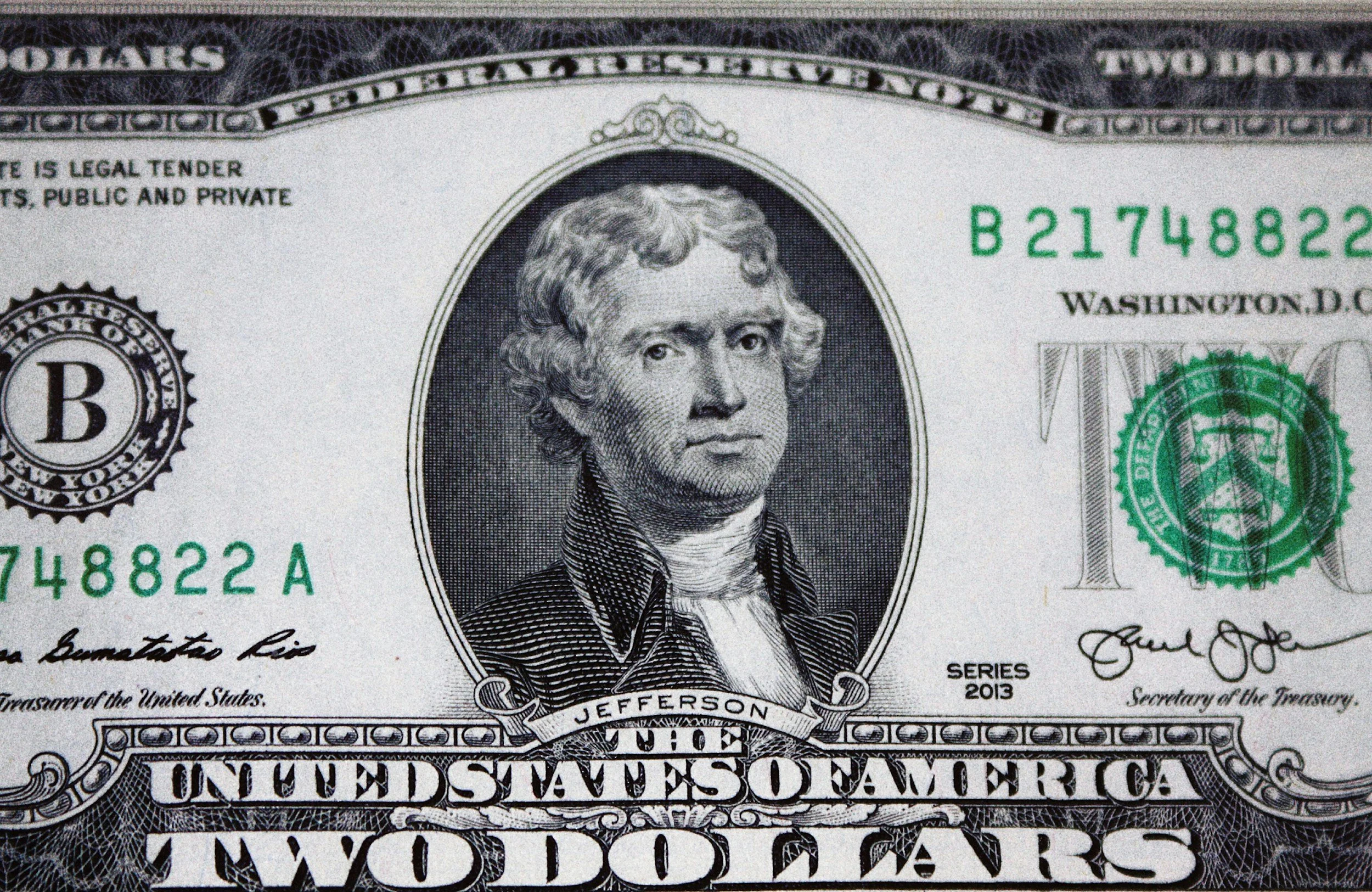
When most Americans think of the Fourth of July, they picture backyard barbecues, fireworks, and the signing of the Declaration of Independence.
Wine probably isn't the first thing that comes to mind.
Yet no Founding Father shaped America's appreciation for fine wine more than Thomas Jefferson. Long before becoming our third President, Jefferson developed an extraordinary passion for French wine that would influence American wine culture for generations.
Ironically, more than 150 years after his death, that same passion became the centerpiece of one of the greatest wine frauds ever uncovered.
America's Original Wine Enthusiast
Most people remember Jefferson as the author of the Declaration of Independence and the third President of the United States. Few realize that before either of those roles, he served as America's Minister to France, where he immersed himself in the country's vineyards and wine culture.
During his years abroad, Jefferson traveled extensively through Bordeaux, Bourgogne, and Champagne, developing relationships with some of France's most celebrated producers. He ordered wines directly from estates including Château Lafite and Château d'Yquem; decades before the famous 1855 Bordeaux Classification officially recognized them among France's greatest wines.
In many ways, Jefferson identified the world's elite wines before the wine world itself had formally done so.
His meticulous records reveal that he regularly purchased cases of wine for both himself and President George Washington. Few Americans of his era possessed such extensive knowledge of fine wine.
Jefferson wasn't shy about sharing his enthusiasm, either.
In letters to friends, he praised wine's health benefits and famously wrote that it was "indispensable for my health." He even argued that wine should not be heavily taxed because doing so would deny ordinary citizens access to its benefits.
Whether his theory held scientific merit is debatable. However, considering Jefferson lived to the remarkable age of 83; an extraordinary lifespan for the late 1700s, it certainly gave him confidence in his argument.
Historical records suggest he spent the equivalent of nearly $250,000 per year (in today's dollars) on wine.
That level of passion would eventually make him famous for far more than his cellar.
The Bottle Worth $157,000

Fast forward to 1985.
At Christie's auction house in London, a dusty bottle bearing the engraved initials "Th. J." and the word "Lafite" appeared to be an extraordinary discovery.
The bottle was believed to have belonged to Thomas Jefferson himself.
Its sale price?
$157,000.
The buyer was billionaire collector William Koch.
At the time, the bottle's authenticity was endorsed by one of the world's leading wine experts, and few questioned the story.
But sometimes the greatest mysteries begin only after the auction ends.
The Investigation
Twenty years later, Koch decided to investigate the bottle's true origins.
Even Monticello, Jefferson's historic home, could not verify that Jefferson ever marked bottles with the initials "Th. J." The evidence wasn't conclusive, but there were enough inconsistencies to raise serious questions.
Koch hired a former MI6 intelligence officer to uncover the truth.
Like something from a James Bond novel, the investigator assembled a team of experts—including a French physicist with an extraordinary technique for dating old wine without opening the bottle.
The physicist searched for cesium-137, a radioactive isotope created during nuclear fallout.
Since cesium-137 did not exist in the environment before the dawn of the nuclear age, any wine produced after the 1940s should contain measurable traces.
The Jefferson bottle contained none.
At first glance, this seemed like good news.
The wine appeared to predate nuclear testing, meaning it could indeed have been centuries old.
But the investigation was far from over.
The Tiny Detail That Changed Everything
The breakthrough came not from the wine itself...
...but from the engraving.
Investigators examined how the initials "Th. J." had been carved into the glass.
During Jefferson's lifetime, engravings were created using hand-powered engraving wheels, leaving irregular, imperfect markings.
The initials on the bottle were remarkably smooth, clean, and uniform.
They appeared to have been made using a modern electric engraving tool.
Imagine comparing handwriting created with a quill pen to lettering produced with a precision rotary tool.
That tiny difference changed everything.
The bottle wasn't a priceless relic from Thomas Jefferson's cellar.
It was almost certainly a modern forgery.
The Ultimate Irony
Perhaps the strangest twist is what happened next.
The fake Jefferson bottles became so infamous that they developed collector value of their own.
Today, the story is considered one of the greatest scandals in wine history and inspired the bestselling book The Billionaire's Vinegar, which chronicles the remarkable investigation.
The scandal also changed the wine industry.
Many prestigious wineries became far more cautious about recorking old bottles, fearing authentic bottles could later be manipulated or substituted with fraudulent ones.
It's the perfect con if you think about it.
If you suspect an old bottle is fake and decide to drink it anyway...
...you've destroyed the very evidence that could have proved the fraud.
A Fourth of July Toast
This Independence Day, raise a glass to Thomas Jefferson; not only the author of the Declaration of Independence, but perhaps America's greatest presidential wine enthusiast.
His love of wine helped introduce generations of Americans to the world's finest vineyards.
Ironically, it also became linked to one of the most fascinating fraud investigations ever told.
And in one final historical coincidence, Jefferson died on July 4, 1826, exactly fifty years after the Declaration of Independence was adopted.
Few lives have been so closely intertwined with America's birthday.
So this Fourth of July, pour a glass, enjoy good company, and remember the President whose passion for wine created a story almost too unbelievable to be true.
"Good wine is a necessity of life for me."
— Thomas Jefferson